Most gym owners who want to add stretch therapy to their facility run into the same wall: they know it’s a good idea, but they have no idea where to start. What do you charge? How do you train staff? What does a session actually look like? How do you sell it to members who have never heard of it?
That’s exactly what CNU Stretch solves. This article breaks down what a turnkey stretch therapy program actually includes, why it works as a gym revenue model, and how CNU Stretch handles every component so you’re not building it from scratch.
What Is Stretch Therapy and Why Do Gym Members Want It?
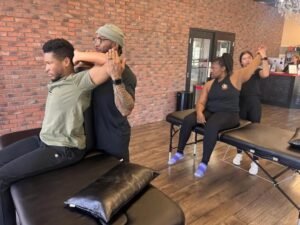
Stretch therapy is hands-on, assisted flexibility and mobility work delivered one-on-one by a certified therapist. Unlike foam rolling or a post-workout stretch a member does on their own, stretch therapy involves a trained professional moving the client through targeted techniques — passive stretching, PNF, active release, and fascial traction — based on what that specific body needs that day.
The members who benefit most include athletes who train hard and recover poorly, desk workers with chronic hip and shoulder tightness, older adults who want to stay mobile and active, and post-rehab clients who need ongoing maintenance beyond what physical therapy covers. That is a wide cross-section of almost any gym’s existing membership — which means the demand is already sitting inside your facility right now.
The business case is equally strong. Stretch therapy sessions are high-margin, require minimal equipment, and generate recurring revenue through packages and memberships.
A gym running two stretch tables at 5 hours a day can generate $15,000 to $25,000 per month from a service line that costs very little to operate compared to equipment-heavy offerings.
What Does a Turnkey Stretch Therapy Program Actually Include?
The word “turnkey” gets used loosely in fitness — but a true turnkey stretch therapy program covers everything. For CNU Stretch it means something specific: everything required to launch, staff, price, and sell a stretch therapy program is already built. You do not need to figure any of it out yourself.
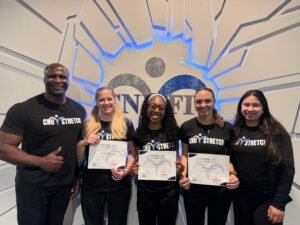
Staff certification. CNU Stretch Level I and II trains your existing staff through one week of online coursework followed by a two-day in-person intensive. By the end they can deliver a full 25 or 50-minute session on a paying client — no guesswork, no six-month ramp-up.
Operational systems. Session structure, intake process, client communication frameworks, and scheduling protocols are all documented and ready to hand to your team the day they finish certification.
Pricing model. CNU Stretch provides tested pricing structures for intro sessions, session packages, and monthly memberships based on what works in real gym environments — not theoretical frameworks.
Marketing materials. Done-for-you templates for social media, email, and in-gym promotion mean you are not staring at a blank page trying to explain stretch therapy to your members from scratch.
Ongoing support. Monthly coaching calls with the CNU Stretch team — who have built and operated a six-figure stretch therapy program inside a real gym, not a consulting firm — keep your program growing after the initial launch.
How CNU Stretch Certification Works
The certification pathway is designed around one goal: producing therapists who are confident and competent from their very first paid session.
Level I covers 35 full-body stretches, the CNU Stretch nervous-system-based methodology, the Green-Yellow-Red client communication framework, a 10-point on-table assessment, massage gun integration, and a 25-minute live practical with a real client.
Level II adds 30 additional techniques for a total of 65, overhead squat assessment for functional movement screening, Kinotek AI-powered movement analysis, full consultation training, and a 50-minute live client practical.
Most staff complete both levels within three to four weeks from enrollment to certification. Gym licensing allows you to certify up to 10 staff members annually as part of the program.
Why Stretch Therapy Is One of the Most Efficient Gym Expansions Available
Most gym growth strategies require more space, more equipment, or more capital. A stretch therapy department requires none of those things at significant scale.
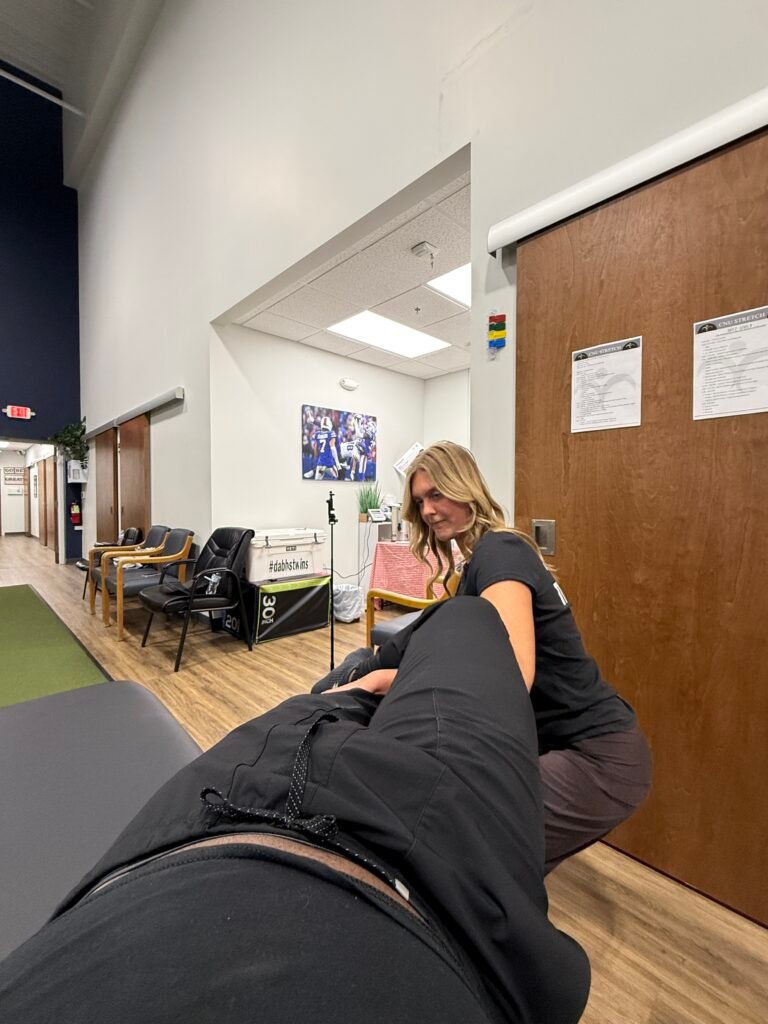
You need a small designated area — a few tables, enough room to move around each one. You can use underutilized floor space, off-peak hours, or a corner of your gym that currently generates nothing. Startup costs are a fraction of what adding a new equipment section or a group fitness studio would require.
Unlike equipment, which depreciates and breaks, your primary asset in stretch therapy is trained people. Once your staff is certified, the program scales by adding sessions and clients — not by purchasing more gear. That combination of low overhead, recurring revenue, broad member appeal, and fast implementation is why gym owners who add stretch therapy consistently report it as one of the highest-return decisions they have ever made.
What to Expect When You Launch
The most common mistake gym owners make when launching stretch therapy is trying to market to new people before they have served their existing members. Start inside.
Every gym has members dealing with tightness, chronic pain, mobility limitations, or recovery challenges. A personal outreach — a direct email or a conversation on the floor — offering a complimentary intro session will fill your first two weeks of appointments without spending a dollar on advertising.
Those first clients become your case studies. A member who gains significant mobility in their hips after four sessions, or who stops waking up with back pain after six weeks of regular stretch therapy, is the most powerful marketing asset you have. Document the outcomes with before-and-after mobility assessments using Kinotek, and share them — with permission — in your marketing.
From there, packages and memberships do the work. A simple package structure — four sessions, eight sessions, or a monthly membership — creates predictable recurring revenue that compounds as your client base grows.
Ready to Add Stretch Therapy to Your Gym?
CNU Stretch works with gym owners to build a turnkey stretch therapy program that generates real revenue, retain more members, and create a service your competitors are not offering.
Book a Free Gym Owner Consultation
No pitch. No pressure. A real conversation about what adding stretch therapy to your gym actually looks like.
Frequently Asked Questions
What does a typical stretch therapy session look like?
A session begins with a brief assessment — the therapist identifies areas of restriction and asks about any pain, tightness, or mobility goals. From there, the therapist guides the client through a sequence of targeted stretches using passive, active, and PNF techniques. Sessions are typically 25 or 50 minutes. The client is fully clothed and lying on a stretch table throughout. Most clients describe it as somewhere between a deep massage and assisted yoga — deeply relaxing but with noticeable functional results.
How much can a gym realistically earn from stretch therapy?
Revenue depends on session volume and pricing, but a gym running two certified therapists each doing four sessions per day at $65 per session generates over $20,000 per month from the program alone. Gyms that build stretch therapy into membership packages see additional retention benefits that multiply the total value. CNU Stretch provides an income calculator at cnustretch.com/income-calculator to model your specific scenario.
Do I need to hire new staff or can I certify my existing trainers?
In most cases certifying existing staff is the faster and more cost-effective path. Your current trainers already know your clients and your culture. The CNU Stretch certification adds the specific technique and methodology on top of that foundation. If your staff is already at capacity, bringing in one dedicated stretch therapist while certifying others gives the program a strong start.
How is CNU Stretch different from other stretch therapy certifications?
The primary difference is the in-person, hands-on training component. Many certifications are entirely online. CNU Stretch includes a two-day intensive with real clients, real-time coaching, and a live practical before certification is awarded. That difference shows up immediately in therapist confidence and client outcomes. The program also includes the full business framework — not just the technique.
What space do I need to launch stretch therapy in my gym?
Most gyms launch with two to four stretch tables. Each table requires roughly eight by ten feet of clear space. Many gym owners convert underutilized areas — a corner of the weight floor, a recovery room, an underused studio — without adding square footage or significant cost.
How long does it take to see a return on the investment?
Most gym owners who implement the CNU Stretch program recover their initial investment within the first 60 to 90 days. The combination of fast staff certification, a ready-made pricing model, and done-for-you marketing materials compresses the typical launch timeline significantly compared to building a program from scratch.