In This Article
What Is Stretch Therapy?
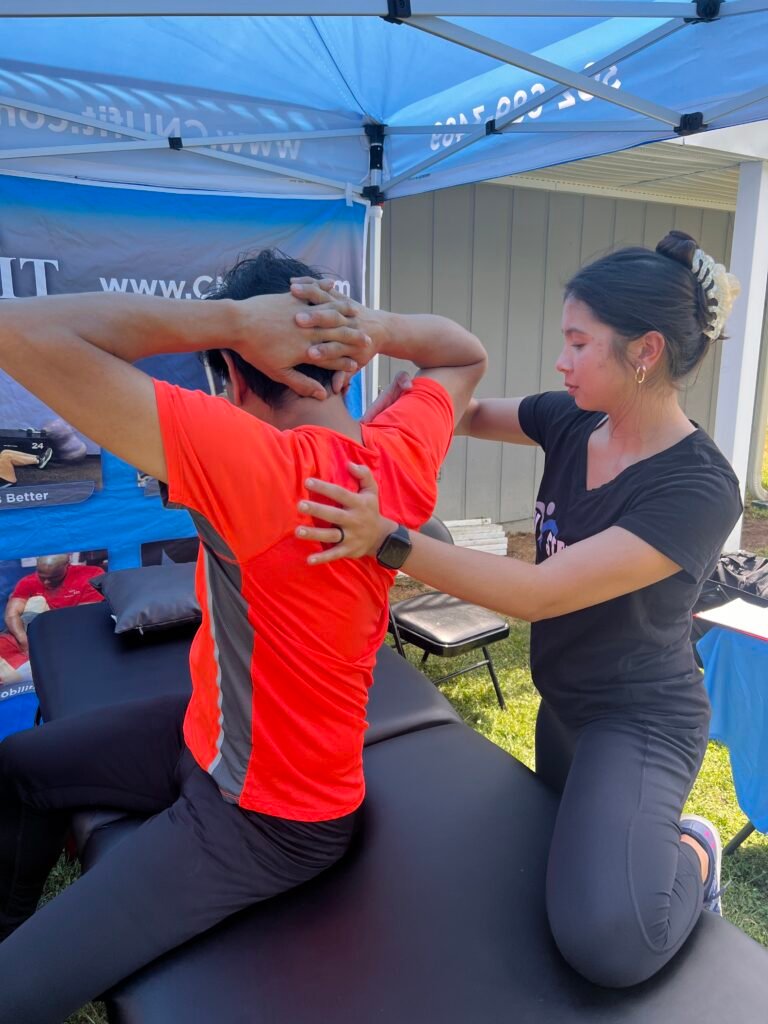
Stretch therapy is a professional, practitioner-guided approach to improving a client's range of motion, reducing muscular tension, and retraining the nervous system's response to lengthening. Unlike static self-stretching you do after a workout, stretch therapy involves a trained professional who applies assisted and facilitated techniques — systematically working through the body's fascial lines, joints, and movement patterns during a dedicated session.
Think of it as the difference between cutting your own hair and going to a skilled stylist. Both involve scissors, but the outcomes are entirely different. A certified stretch therapist brings assessment, technique, anatomical knowledge, and a structured protocol that produces results self-stretching simply cannot match.
At its core, stretch therapy is a form of bodywork designed to help clients function better in everyday life. Tightness contributes to pain and restrictive movement — and most people have no idea how much their lack of flexibility is affecting how they feel, move, and live.
Stretch therapy is the professional practice of guided, assisted movement designed to systematically reduce fascial restriction, recalibrate neuromuscular response, and restore functional range of motion — performed by a trained and certified practitioner.
Stretch Therapy vs. Regular Stretching
This is the most common question people ask — and the answer matters. Regular stretching and stretch therapy are related, but they are not the same thing.
When you stretch on your own, you are typically targeting surface-level muscle length. You hold a hamstring stretch for 30 seconds, feel a pull, and move on. That has value. But it does not address the deeper fascial restrictions, nervous system patterns, or postural imbalances that are causing most of the tightness and pain people experience.
Professional stretch therapy goes deeper — in every sense. A certified stretch therapist:
- Assesses your movement patterns before any technique is applied
- Identifies the specific fascial restrictions and muscle imbalances driving your limitations
- Uses facilitated and assisted techniques that access ranges of motion you cannot reach alone
- Monitors your nervous system's response in real time, adjusting depth and pressure accordingly
- Designs a progressive program — not a one-size-fits-all routine
The Science Behind Stretch Therapy
Stretch therapy works on two interconnected systems: fascia and the nervous system. Understanding both helps explain why professional stretch therapy produces results that feel almost immediate — and why they compound over time.
Fascia: The Tissue Nobody Talked About
Fascia is the connective tissue web that encases every muscle, organ, bone, and joint in your body. For decades, it was considered inert packaging. We now know it is highly dynamic — rich in nerve endings, capable of generating force, and deeply involved in how your body feels and moves.
When fascia becomes restricted — through repetitive stress, sedentary posture, injury, or inadequate recovery — it creates adhesions that limit movement and generate chronic tension and pain. Stretch therapy applies targeted techniques to these fascial lines, restoring tissue length and mobility at a level that static self-stretching does not reach.
The Nervous System: The Real Gatekeeper of Flexibility
Here is something most people don't realize: flexibility is not primarily a muscle problem — it's a nervous system problem. Your range of motion is largely determined by what your brain allows, not what your muscles are physically capable of.
The stretch reflex — an involuntary muscular contraction triggered when a muscle is lengthened too quickly — exists to protect you from injury. But in many people, this reflex is overtuned. The nervous system fires defensively at ranges of motion that are not actually dangerous, limiting flexibility far below its structural potential.
Stretch therapy works by gradually recalibrating this response. Through consistent, methodical practice, a skilled practitioner helps the nervous system learn to tolerate greater ranges of motion — a process clinically called neuromuscular re-education. Peer-reviewed research on active-assisted stretching confirms that this practitioner-guided approach produces significantly greater flexibility gains than passive or self-directed stretching alone. This is why results from stretch therapy feel different from stretching on your own. You are not just lengthening tissue; you are reprogramming how your brain perceives and allows movement.
"Tightness contributes to pain and restrictive movement. Our goal is to increase mobility and relieve pain — and to help people get their life back through a holistic approach to how the body moves."
Benefits of Stretch Therapy
The benefits of stretch therapy extend well beyond "feeling more flexible." Clients who receive regular professional stretch therapy report changes in how they move, how they feel, and how they function in everyday life.
Increased Range of Motion
Measurable improvements in joint mobility and movement freedom — tracked over time using objective assessment tools.
Chronic Pain Reduction
Many clients see significant reductions in lower back pain, hip tightness, shoulder restriction, and neck tension after consistent sessions.
Improved Posture
Addressing the fascial restrictions that pull the body out of alignment — rounded shoulders, anterior pelvic tilt, forward head posture — leads to lasting postural change.
Better Athletic Performance
Athletes use stretch therapy to maintain tissue health, improve mechanics, accelerate recovery, and access movement ranges that training alone doesn't produce.
Functional Daily Movement
Clients report being able to do things they thought were gone — getting in and out of a car without pain, playing with grandkids, reaching overhead without discomfort.
Faster Recovery
Regular stretch therapy reduces muscular soreness, improves circulation, and helps the body recover from training and physical stress more efficiently.
What makes these outcomes different from what people get from foam rolling or self-stretching is the combination of assessment, technique depth, and nervous system engagement that only a trained practitioner can provide. A certified stretch therapist is not just applying pressure — they are reading the body's responses and adjusting every second of the session.
What to Expect in a Stretch Therapy Session
If you've never experienced professional stretch therapy, knowing what to expect makes the first session far more productive. Here's how a well-designed stretch therapy session unfolds.
Movement Assessment
Before any stretching begins, a certified practitioner assesses your movement patterns, postural alignment, and range of motion. At CNU Stretch, this includes a 10-point on-table assessment and Kinotek AI movement analysis — giving both the practitioner and the client objective, data-driven insight into where restrictions exist and what's driving them.
Session Design
Based on what the assessment reveals, the practitioner designs the session around your specific restrictions and goals — not a generic full-body routine. Every session is different because every body is different.
Assisted & Facilitated Stretching
You lie on a treatment table while the practitioner guides you through a series of assisted and facilitated techniques. You are not passive — your involvement is part of what makes the techniques effective. The practitioner controls depth, leverage, and timing while you provide real-time feedback.
Real-Time Client Feedback
At CNU Stretch, practitioners use the Green-Yellow-Red (GYR) feedback system to keep every stretch in the productive therapeutic range — never too shallow to produce change, never deep enough to cause pain or trigger a defensive response.
Progress Tracking
Results are measured — not estimated. Kinotek AI movement analysis tracks your range of motion over time, giving you visible evidence of the mobility improvements you are achieving session by session.
Sessions typically run 25 to 50 minutes. Most clients feel noticeably different within the first session — less tight, more mobile, and often surprised by how comfortable the experience is. Stretch therapy should never be painful. The goal is always to work in the zone where change happens — deep enough to be productive, never deep enough to cause discomfort.
How the GYR Feedback System Works
One of the most important innovations in professional stretch therapy is how clients communicate with their practitioner during a session. The traditional 1–10 pain scale is deeply subjective — what is a "6" to one person is a "9" to another. Miscalibration leads to either underperforming sessions or, worse, pushing past safe tissue tolerance.
CNU Stretch uses a proprietary Green-Yellow-Red (GYR) framework — a universally understood traffic-light system that gives practitioners precise, real-time feedback from session one.
Beginning to Feel It
The nervous system is relaxed. The stretch is present but not yet at therapeutic depth. The practitioner continues to deepen.
The Productive Zone
This is where mobility improvements actually happen. The client is at therapeutic tension — engaged, challenged, but not overloaded. Target zone.
Back to Yellow
The client is approaching pain. The practitioner eases back immediately. Red is not failure — it's precise communication that prevents injury.
This framework eliminates the guesswork that causes most stretch therapy sessions to underdeliver or push too hard. New therapists trained in the GYR system reach client competency faster — and clients report feeling safer, more comfortable, and more in control from their very first session.
Who Should Try Stretch Therapy?
Stretch therapy is not exclusively for athletes or people in pain. The honest answer is that almost anyone with a body that moves — or wants to move better — can benefit from professional stretch therapy. Whether you are exploring stretch therapy for the first time or looking to make it a regular part of your wellness routine, the barrier to entry is low and the upside is significant.
That said, certain groups see particularly significant results:
- Office workers with postural restriction from hours of seated work — forward head posture, tight hip flexors, rounded shoulders
- Athletes seeking performance gains, better movement mechanics, and faster recovery between training sessions
- Older adults who want to maintain functional mobility and independence — getting in and out of chairs, bending, reaching, playing with grandkids
- Post-rehab clients who have finished formal physical therapy but still feel limited in movement quality and range
- Personal training clients whose progress has plateaued because mobility limitations are preventing full expression of their strength
- Anyone with chronic tension — lower back tightness, neck pain, hip restriction — that has not resolved with foam rolling or self-stretching
At CNU Fit, our stretch therapists are also certified trainers. That combination matters — because we understand how the body works as a whole system. We don't just stretch muscles in isolation; we address the movement patterns, postural habits, and functional goals that define what "better" actually means for each client. That's what gives stretch therapy results that last.
Frequently Asked Questions About Stretch Therapy
Is stretch therapy the same as yoga or physical therapy?
How often should I get stretch therapy?
How quickly will I see results from stretch therapy?
Do I need to do anything to prepare for a stretch therapy session?
Can I get stretch therapy certified to offer it to my own clients?
Ready to Experience Stretch Therapy?
CNU Stretch certification trains practitioners to deliver professional stretch therapy using the GYR system, AI-assisted movement assessment, and a complete client communication framework. Upcoming intensives in Delaware, Idaho, Virginia, and Oregon.
View Certification Dates →